Here’s a question a lot of business owners get stuck on: should I focus on Trustpilot or Google Reviews?
The honest answer is that they serve different purposes. But understanding those differences is what lets you build a smarter reputation strategy.
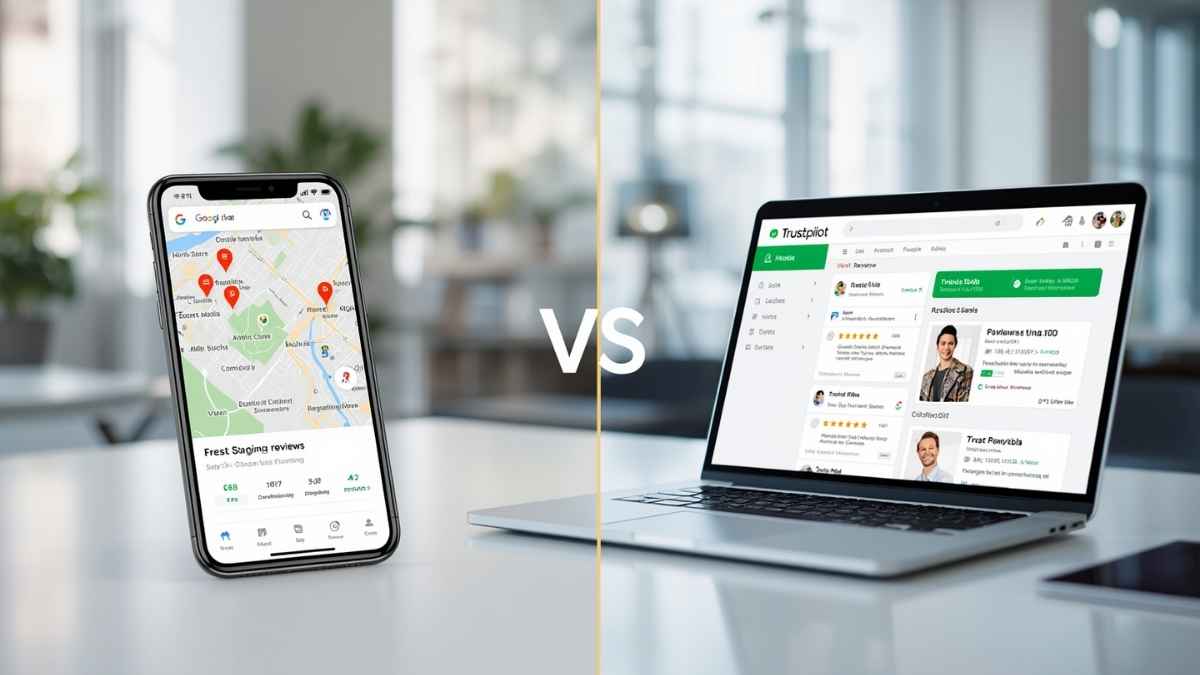
Let’s break down Trustpilot vs. Google Reviews side by side.
The Core Difference
Google Reviews are tied to your Google Business Profile. They show up in local search results, on Google Maps, and in the local pack. If you have a physical location or serve a local area, Google Reviews are often the most visible reviews you have.
Trustpilot is a standalone review platform. It’s not tied to location. It’s focused on business credibility across e-commerce, services, and online businesses. Trustpilot reviews rank on Google independently, often appearing for branded searches.
They’re complementary, not competing.
Where Google Reviews Win
Local Search Visibility
For local businesses, restaurants, contractors, dentists, and retailers, Google Reviews are the most important. Your star rating shows up directly in Google Maps and local pack results. Shoppers see it without ever clicking away.
If someone searches “plumber near you” or “dentist near you” in your city, your Google rating is one of the first things they see.
SEO for Local Intent Queries
Google Reviews feed directly into your local SEO performance. Quantity, recency, and rating all influence how Google ranks your business in local searches.
Zero Friction for Reviewers
Anyone with a Google account can leave a review. No additional signup required. That low barrier means higher organic review volume for most businesses.
Where Trustpilot Wins
E-Commerce and Online Business Credibility
For businesses that operate primarily online, without a physical storefront, Google Reviews are less relevant because there’s no location to anchor them.
Trustpilot was built for exactly this scenario. It’s where online shoppers go to verify that an e-commerce store, SaaS product, or digital service is legitimate.
Review Depth and Specificity
Trustpilot reviews tend to be more detailed. The platform encourages thoughtful feedback. For businesses where the specifics of service quality matter, financial services, legal, home renovation, detailed Trustpilot reviews build more nuanced trust.
Third-Party Independence
Consumers know that Trustpilot is independent from Google. That independence adds perceived credibility. A 4.8 on Trustpilot feels different than a 4.8 on Google because it’s not controlled by the same company that handles search results.
Display in Ads and Marketing
Trustpilot’s TrustBox widgets and star ratings can be displayed on your website and in Google Ads as seller ratings. This is a significant conversion advantage that Google Reviews don’t offer in the same way.
Do You Need Both?
Yes, if you’re a multi-channel business, you really do.
A local service business that also does online sales benefits from strong Google Reviews (for local search) AND a strong Trustpilot profile (for online credibility).
An online-only business, pure e-commerce, SaaS, or digital services probably gets more return from Trustpilot investment, though Google still matters for branded search results.
Practical Strategy: Which to Focus On First
Start with Google Reviews if:
- You have a physical location
- Local search is your primary acquisition channel
- Most of your customers find you through “near you” searches
Start with Trustpilot if:
- You’re primarily an online business
- Your customers research purchases online before buying
- You run Google Ads or want to show seller ratings
- You need a trust badge for your website
For many businesses, the answer is to build both simultaneously, using different tactics for each.
What Both Platforms Have in Common
Both platforms reward businesses that:
- Have higher review counts
- Have more recent reviews
- Respond to reviews regularly
- Maintain a rating above 4.0
That’s the core of any review growth strategy, regardless of which platform you’re prioritizing.
Need help building your Trustpilot profile specifically? Read our guide on how to boost Trustpilot reviews or see how we can help you buy Trustpilot reviews to get your profile competitive fast.
Also useful: how many people use Trustpilot in 2025. The stats there help you understand the platform’s reach for your specific market.
Frequently Asked Questions
Do Trustpilot reviews affect my Google ranking?
Not directly. But your Trustpilot profile page can rank independently in Google for branded searches. And if you use Trustpilot seller ratings in Google Ads, they can improve your ad performance.
Can I display my Trustpilot rating on my website?
Yes. Trustpilot offers TrustBox widgets that show your current rating and review count on your site. These are updated in real time as you get new reviews.
Which platform is harder to get reviews removed from?
Google has a review removal process, but it’s slow and inconsistent. Trustpilot has a clearer dispute process. Neither platform makes it easy to remove negative legitimate reviews, nor should they.
Is it possible to rank in local search using Trustpilot?
Trustpilot isn’t a local search platform, so it won’t help with “near you” searches. That’s Google’s territory. But a strong Trustpilot profile can rank for “[Your Business Name] reviews” type searches.
Which platform do U.S. consumers trust more?
Both have high trust. Google Reviews are more familiar to casual shoppers. Trustpilot carries more weight with research-oriented buyers and in industries like finance, software, and home services where detailed reviews matter.